We live near a stony beach and for years watched other families going fossil hunting but had no idea what they were looking for. Then we tried it and had a lot of fun but it wasn’t quite like I expected. This is probably not the most scientific blog you’ll find but here’s a practical guide to how we finally got fossil hunting.
But there’s stones EVERYWHERE and they ALL have marks on them…
That’s where we started. It took us a while to realise that they all have DIFFERENT types of marks and they’re all interesting. In some ways whether it’s a fossil is the least important bit. The key is to look at them properly…
Different types of stone
I don’t remember really studying geology in school. It was quite a long way into the 365 day nature play challenge that I cottoned on to the coolness of rocks. We were in Cardiff Bay and noticed a MASSIVE bit of coal which was on display. I was fascinated and we started to look properly at the stones we found on the beach. There were different colours and different shapes. Some of them broke easily. Some were hard and pointy and could be used to make marks on things.
What’s your favourite rock? Can you find one that’s a cool shape? What colour do you like best? Can you find one that looks like something else?
Patterns
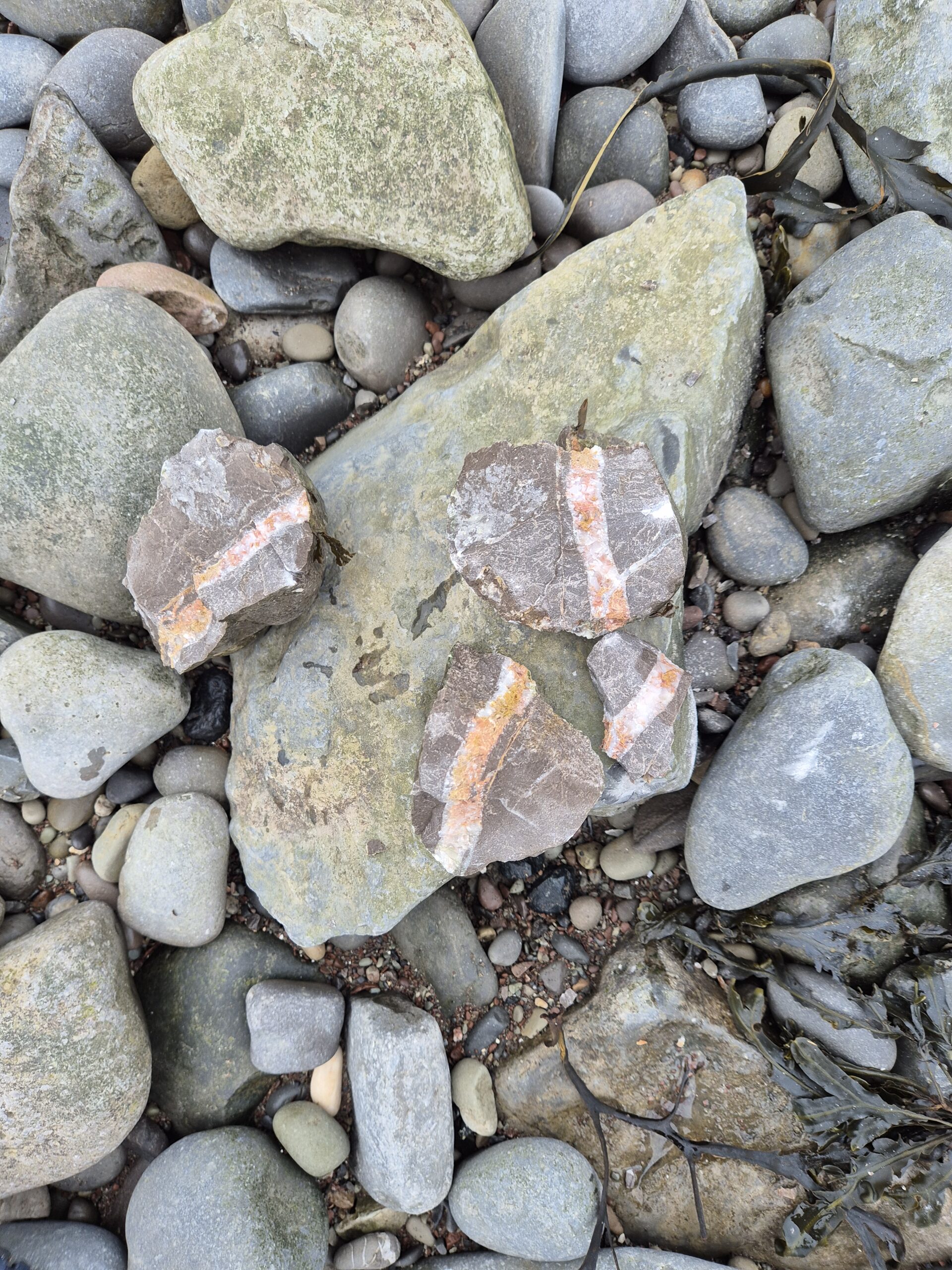
Now you’ve got them looking, can you find any with cool patterns on them? If they do, they might be a fossil. Do the patterns look like something else? These are some of the ones we found…


I’m not sure about the one on the right. We thought the others are fossils because the patterns on them look like other things. There was one which I’m SURE was fossilised wood because it looked just like it and had a really cool texture. But we don’t know and we might be wrong. That’s ok I think? Because it keeps you questioning and we can’t always get the answers. B was tempted into getting google to identify them for us but I felt that way madness lies.
Finding something cool
B’s favourites were actually not the fossils. She found stones which had crystallised cracks inside and looked really cool. She loved those. We decided they were witch stones and could be used to make potions. However, it turns out witch stones are ones with holes in. We didn’t find any of those but we’ll look next time.
B knows a lot about fossils and wanted to find an ammonite. I think that was probably over reaching for the first attempt but she had a lot of fun smashing stones on rocks to get them to break. One broke and had an amazing vein of coral coloured rock running through it inside. That was really exciting. Then she worked out she could use a sharp stone to draw an ammonite on a plain rock, which was just as much fun.


It’s about the journey
So that was our first fossil hunting day. We maybe found a few, and found other things too, and we started noticing what was around us. It took me a while to realise that that was probably the point.
Next time we go to the beach, we’ll look at the stones again and find more cool ones and probably some fossils and they won’t necessarily be the same thing. And one day maybe we’ll spot an undiscovered dinosaur footprint!
More information from people who know about fossils…
Countryfile have a great overview with pictures of things you can find. This brilliant page on UK Fossil Collecting will tell you where you can find fossils near you and what to look for. National geographic kids have a great blog about serious fossil hunting with kids. I’m so tempted to lick and see if it’s a bone now!
Finally, a call out to the Wild Space Project who do an amazing fossil workshop and also know lots about owl pellets too! We’ve got that adventure still to come I think.


